Ask what a home costs in Easton right now and the honest answer depends on which browser tab you open. Redfin's read on the city for March 2026 put the median sale price at $252,000, down 13 percent from the year before, built on just 15 closings for the entire month. Open Houzeo in the next tab and April's citywide figure reads $374,900, up more than 11 percent year over year, with homes selling at 99.68 percent of asking price and only 0.97 months of supply on the market. A third site, Homes.com, lands at $390,000. Zillow's automated valuation, meanwhile, pegs the average home value at $365,762.
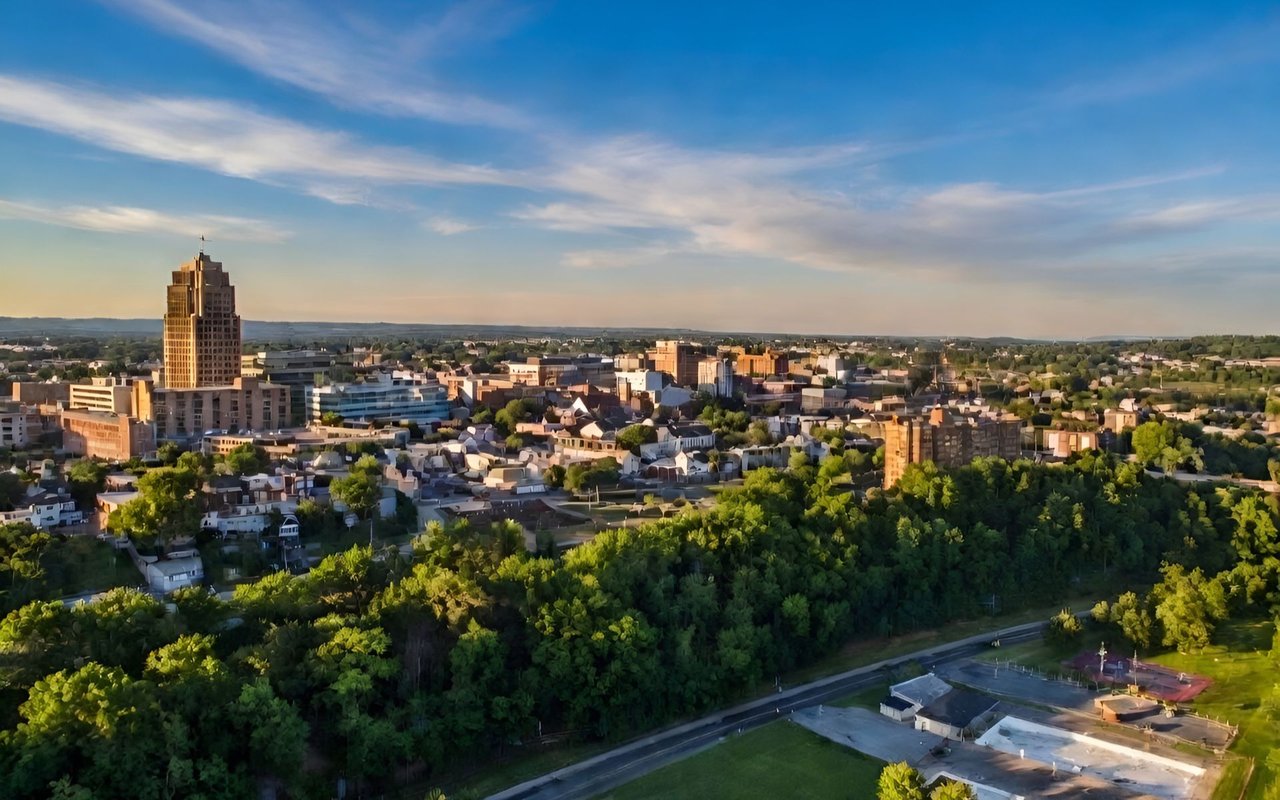
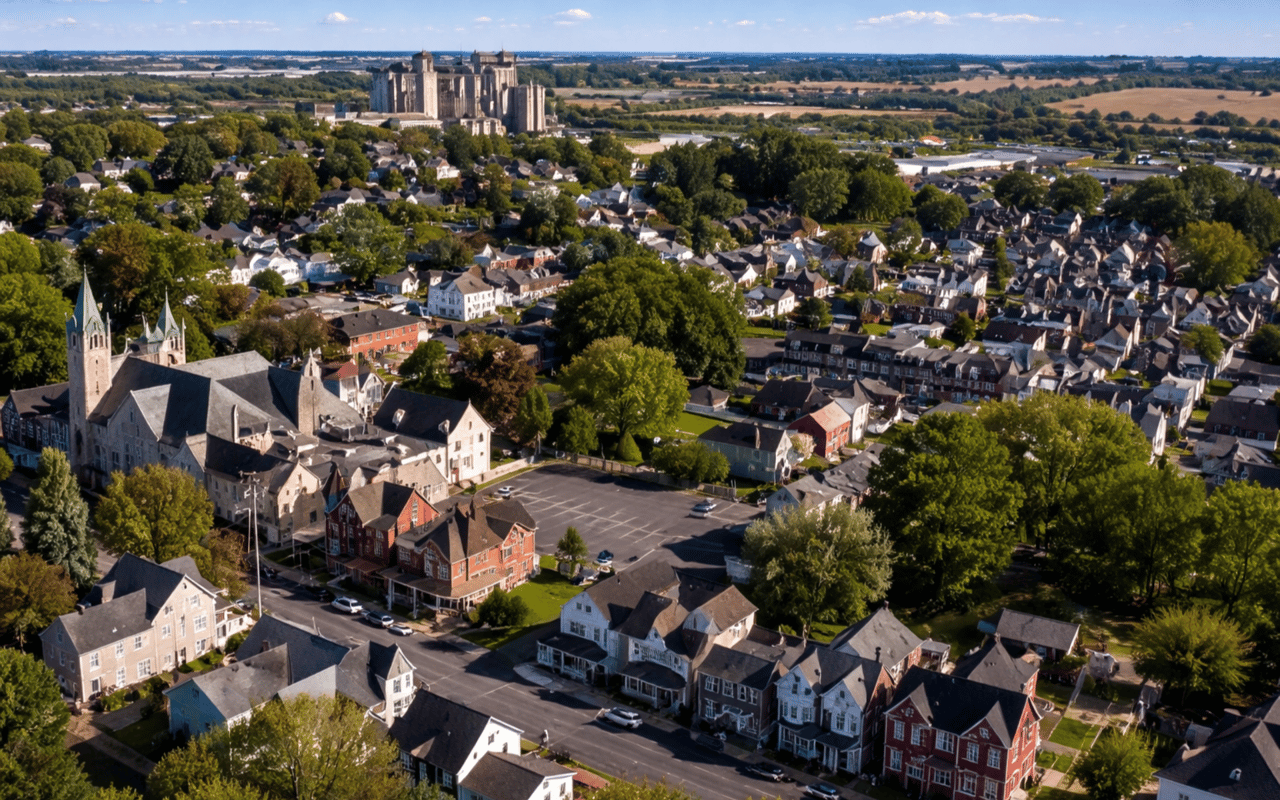
None of these numbers are wrong. They're each accurately describing a market too thin, and too unevenly distributed, to produce one honest median. Easton isn't one housing market wearing a single zip code. It's at least three, moving in different directions, and the citywide figure is just an average of neighborhoods that don't behave alike.
The math behind the disagreement
Look inside Redfin's own March 2026 numbers and the contradiction is right there in one data set. The average Easton home price that month rose 18 percent year over year, while the median sale price fell 13 percent over the same stretch. That's not a typo. When only 15 homes close in a month, a handful of high-end sales can pull the average up while the shrinking pool of everyday sales drags the median down. Small sample size does that. Easton had 25 sales in March 2025 and only 15 in March 2026, so the same statistical noise that made last year's numbers look stable is now doing the opposite.
Houzeo's April 2026 snapshot tells a calmer story on the surface, a sale-to-list ratio near par and a genuinely tight 0.97 months of supply. But it's describing the same small city one month later, and one month is often the difference between whether a $600,000 riverfront sale or a $180,000 rowhome sale happened to close.
Three cities inside one zip code
The neighborhood-level numbers explain why the citywide figure moves the way it does.
West Ward is the most affordable of Easton's core neighborhoods. As of April 2026, the median home price there was $225,000, with the broader range running from around $130,000 for a two-bedroom twin up to $375,000 for a larger single-family home. Northampton Street is the neighborhood's commercial spine, home to Plants + Coffee, Noto's Deli, the Lebanese restaurant Daddy's Place, and Porters' Pub. Vanderveer Park sits next to Paxinosa Elementary School near the middle of the neighborhood. West Ward has also had sustained institutional attention for years: a state-backed reinvestment effort announced in 2019, coordinated through the West Ward Community Initiative and the Greater Easton Development Partnership, committed $200,000 a year for six years to revitalization work stretching from Sixth to 15th Streets and Butler to Jackson Streets, funded through pledges from PNC Bank, Peoples Security Bank & Trust, Lafayette Ambassador Bank, and HM Life Insurance Company. That's not a new headline. It's a multi-year trajectory that helps explain why West Ward's lower entry price hasn't meant lower momentum.
College Hill is where the data itself becomes the story. Depending on which page of the same portal you land on, College Hill's 12-month median sale price shows up as $355,000, down 12 percent, or as $447,500, up 17 percent. A separate figure pegs the April 2026 median at $426,000. Three numbers, one neighborhood, one data provider, all technically current. College Hill typically has only a handful of active listings at any given time, which is exactly the kind of thin inventory that makes a percentage change look dramatic when the underlying sale count is small. The neighborhood sits above the Delaware River and Bushkill Creek, anchored by Lafayette College, with dining along Cattell Street at spots like Giacomo's market, College Hill Tavern, and Milo's Place, plus Nevin Park and the Karl Stirner Arts Trail nearby.
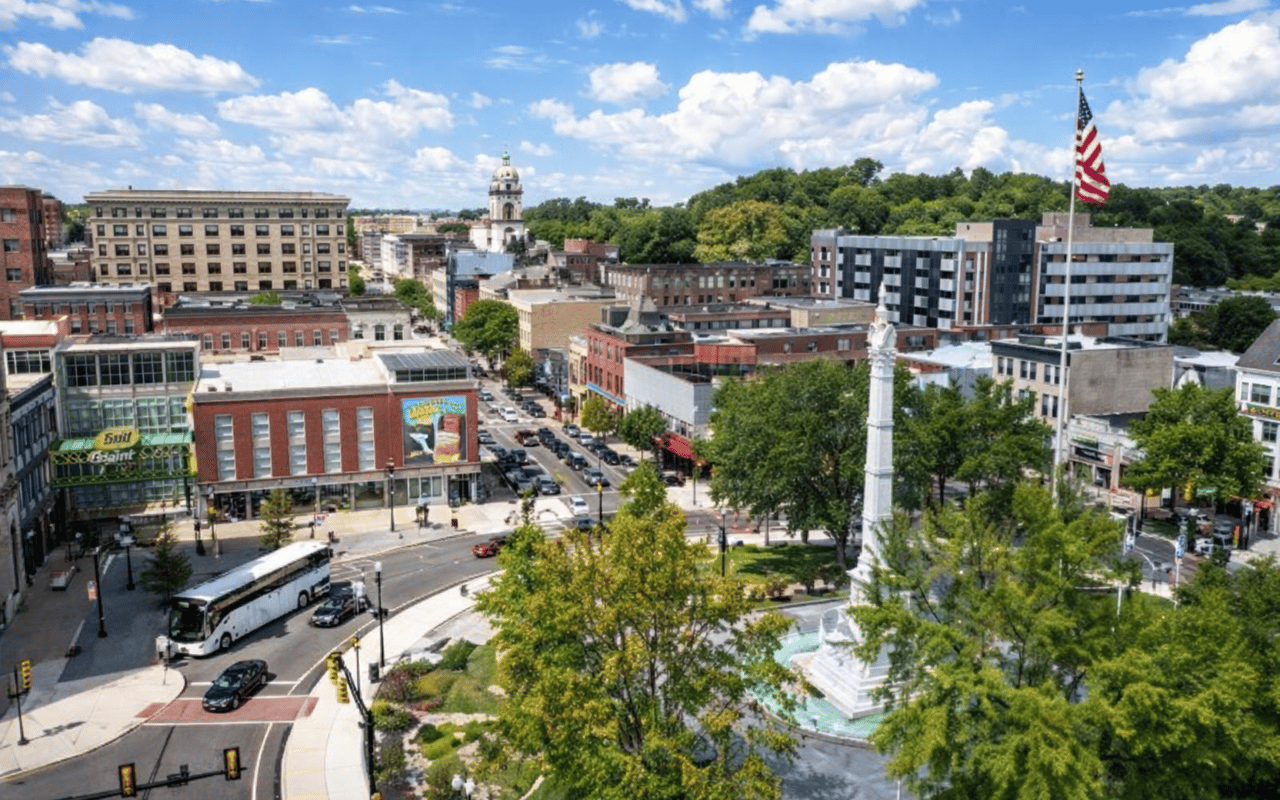
Downtown and the Downtown Easton Historic District show the volatility at its most extreme. Redfin's November 2025 figures put the Historic District's median sale price at $593,000, up 42.8 percent year over year, on 12 sales that month compared to just 5 the year before, with homes taking 32 days to sell versus 5 days previously. The broader Downtown Easton area, a wider geography in Redfin's own categorization, posted a $666,000 median, up 125.8 percent, at $281 per square foot. A jump like that isn't a sign of a neighborhood doubling in value overnight. It's what happens when a dozen sales, a mix of a modest rowhome and a couple of larger historic properties, get averaged into one monthly figure.
What the median never prices in: flood exposure
Here's the variable that doesn't show up in any listing price but shapes what ownership actually costs. Citywide, First Street's flood risk data for Easton puts 11.1 percent of properties at risk of flooding over the next 30 years, with 10.8 percent carrying that risk today. Narrow the view to Downtown Easton specifically, the neighborhood sitting at the actual confluence of the Delaware and Lehigh Rivers, and that figure jumps to 61.1 percent of properties with 30-year flood risk, 58.7 percent today. First Street also estimates that a severe, 1-in-100-year flood event occurring today could affect 86 properties in Downtown Easton alone.
Standard homeowners insurance doesn't cover flood damage, and properties in FEMA's high-risk flood zones are typically required to carry separate flood coverage as a condition of a mortgage. That means the same downtown premium showing up in the median sale price also tends to carry a recurring insurance line item that a College Hill buyer, sitting up on the bluff above the rivers, doesn't face in the same way. Before writing an offer on anything near the Easton riverfront, it's worth asking for a flood zone determination and, if one exists, the property's elevation certificate. That's a question for an insurance agent or lender, not something to guess at from a listing photo.
The other line item: getting a Certificate of Appropriateness
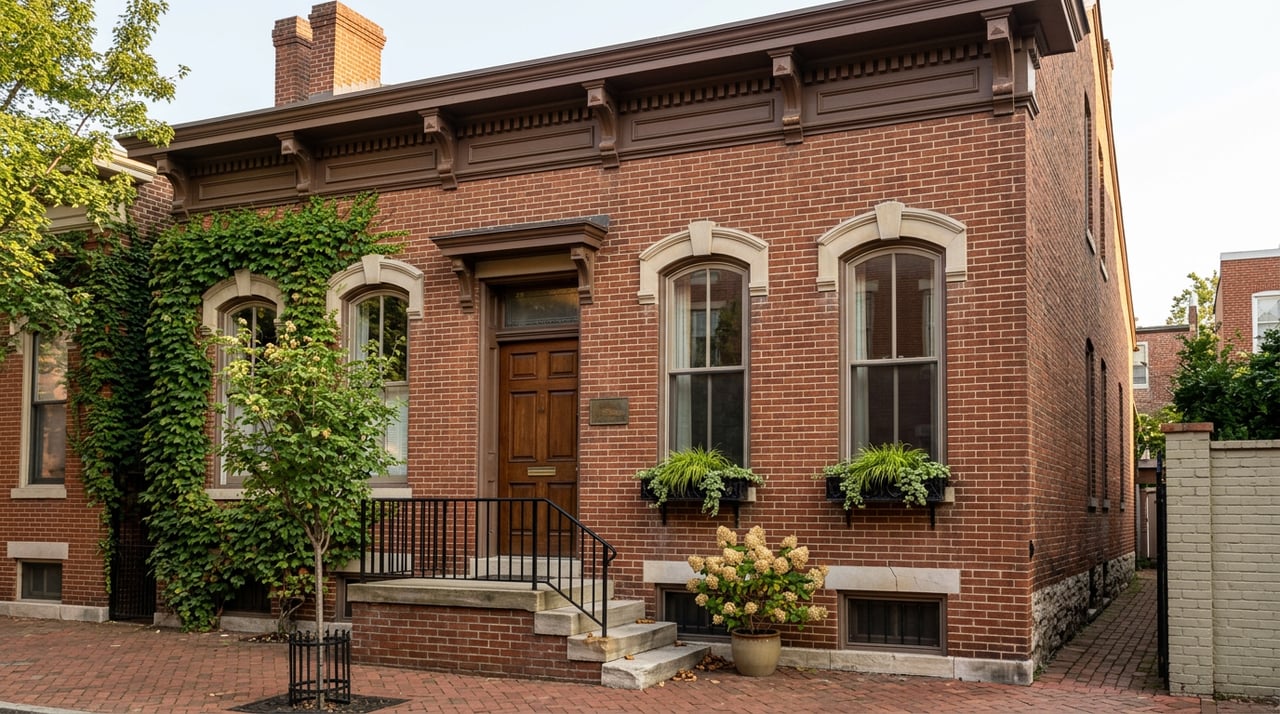
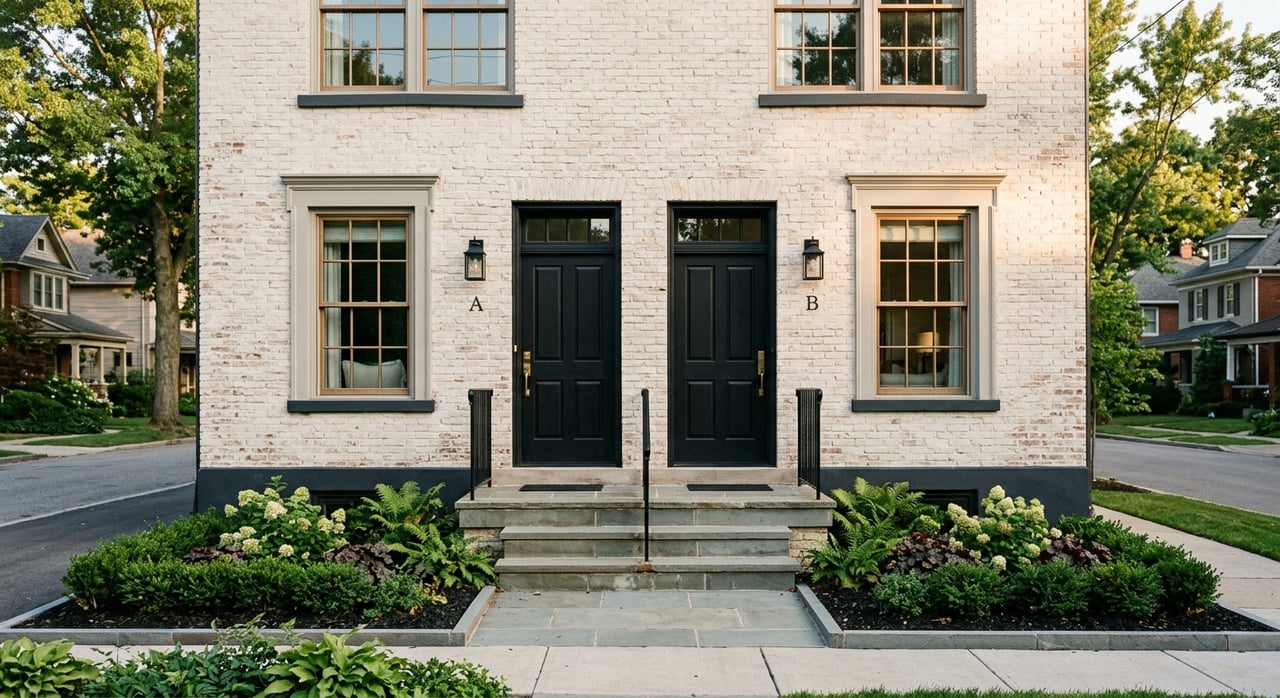
Buy inside the Downtown Easton Historic District or a similarly designated historic section of College Hill, and exterior work runs through a public review process before it runs through a permit. Easton's Historic District Commission, established under Pennsylvania's Historic District Act of 1961 and codified in Chapter 318, Article IV of the city's code, is a seven-member board appointed by City Council that meets publicly at least once a month. Its job is to recommend whether Council should issue a Certificate of Appropriateness for exterior changes, new construction, additions, and alterations visible from the street.
None of this is a reason to avoid a historic-district property. It's a reason to budget calendar time, not just dollars, into a renovation plan. A window replacement or a new porch rail on a historic-district home is not a same-week permit. It's a review-board agenda item first.
Township new construction wears the same address
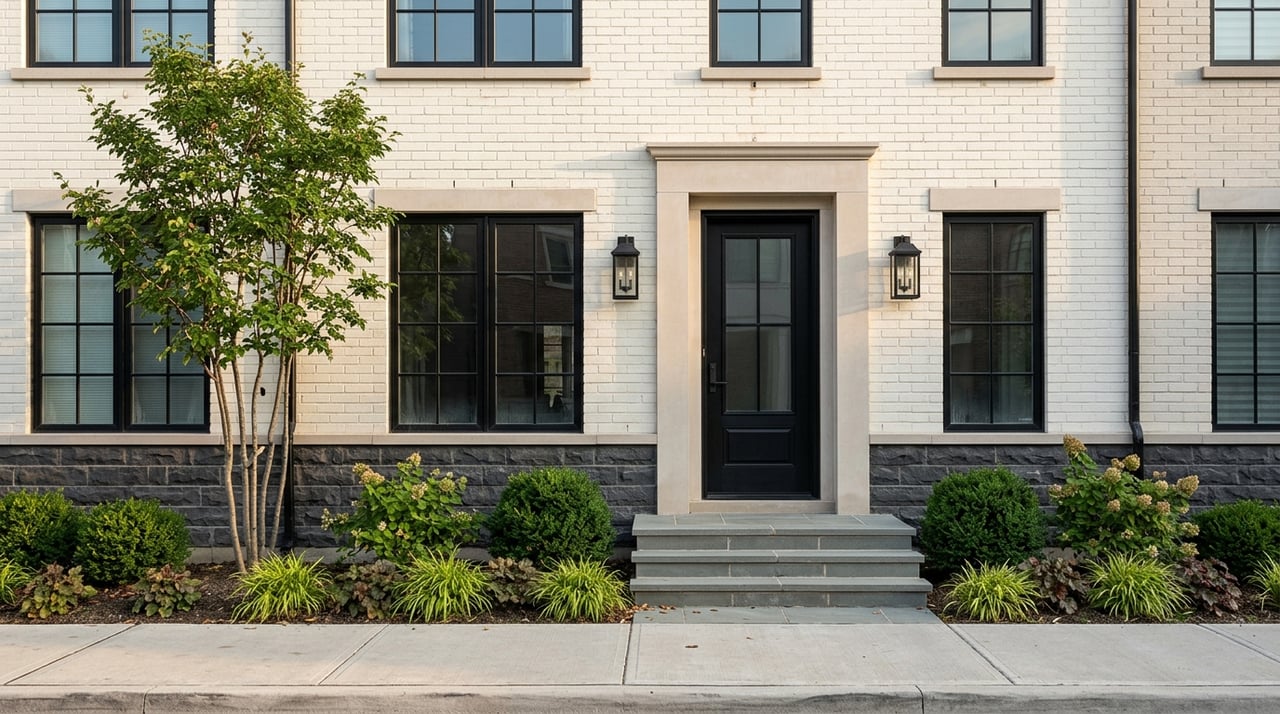
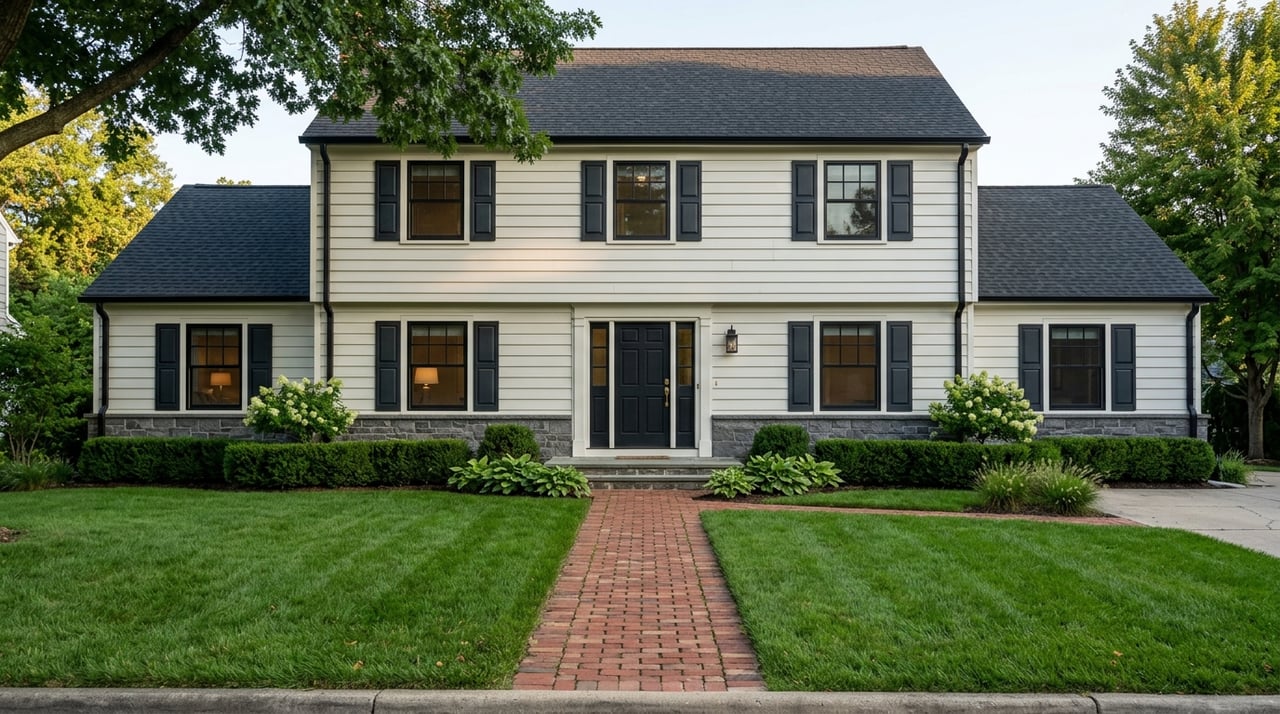
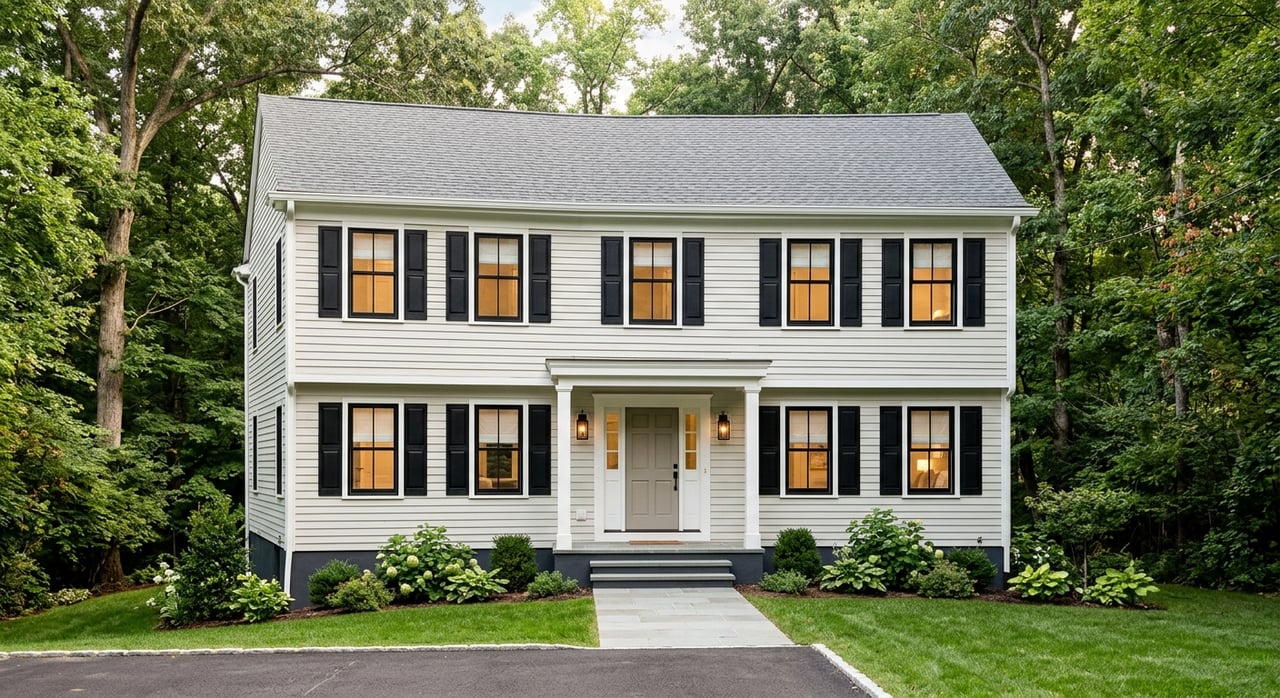
Part of why "Easton" numbers swing so widely on portals is that the search radius often blends the actual city with new construction in the surrounding townships. The greater Easton area includes the city itself plus three townships, Forks, Palmer, and Williams, and three boroughs, Glendon, West Easton, and Wilson. Communities like Kay Builders' Fields at Lafayette Way, an active adult community on a hillside above Bushkill Creek, sit three miles from downtown in Forks Township. Riverview Estates, built by Segal & Morel, is also in Forks. Redfin's own "new homes in Easton" search returns 22 listings at a median list price of $340,000, a figure that blends this township product with rowhomes inside the actual city limits.
None of those township communities are subject to Easton's Historic District Commission. None carry the same flood exposure as the riverfront downtown. When a portal reports an "Easton" median, some of what's baked into that number came from a different municipality altogether.
What this actually means for a buyer
The citywide median isn't a useful number on its own. It's an average of a $225,000 neighborhood, a $350,000-to-$450,000 neighborhood with a genuinely small and volatile sample, a $590,000-to-$660,000 riverfront pocket, and new construction in three surrounding townships, all filed under one search term. The more useful question isn't "what's Easton's median home price." It's "which of these four markets am I actually comparing, and what does that specific pocket cost to insure, renovate, or hold long term."
FAQ
Is West Ward a lower-cost way into the Easton market? West Ward's April 2026 median of $225,000 is meaningfully below the citywide figures reported elsewhere, and the neighborhood has had sustained multi-year reinvestment through the West Ward Community Initiative. Price point and neighborhood investment activity are two different things worth weighing separately.
Do I need flood insurance if I'm buying on College Hill instead of downtown? Elevation and proximity to the rivers change the underlying risk, but flood risk determination is property-specific, not neighborhood-wide. Standard homeowners insurance excludes flood damage everywhere in Easton, so it's worth asking for a flood zone determination on any property regardless of which side of the city it sits on.
What triggers a Certificate of Appropriateness review? Exterior changes visible from a public street, in a designated historic district, generally require it before a permit issues. The specific scope of what qualifies is set out in Easton's own code, linked above, and is worth reviewing with the city before finalizing renovation plans on a historic-district property.
If you're comparing Easton's neighborhoods against each other, or against Bethlehem and Allentown, and want the block-by-block version of this data rather than the citywide average, The Cliff Lewis Experience can walk through what a specific price point actually buys in each one. Contact us.