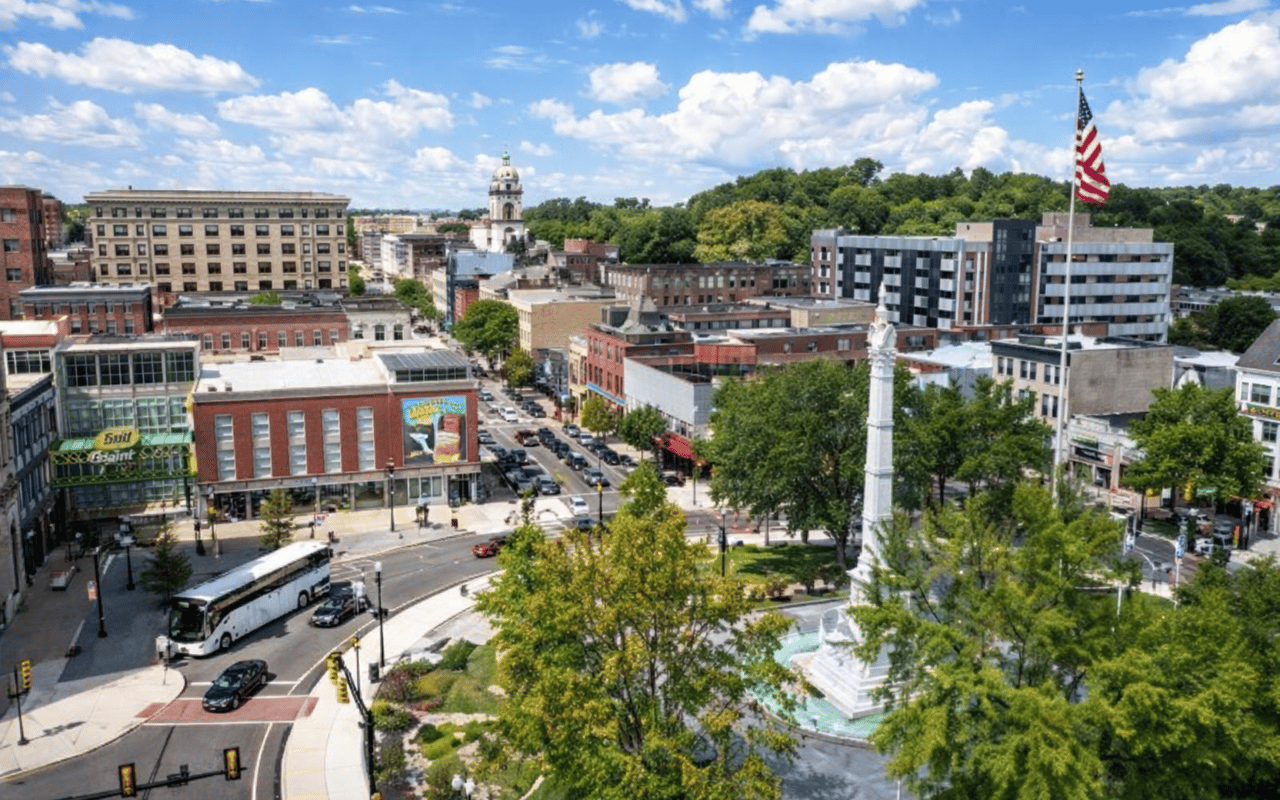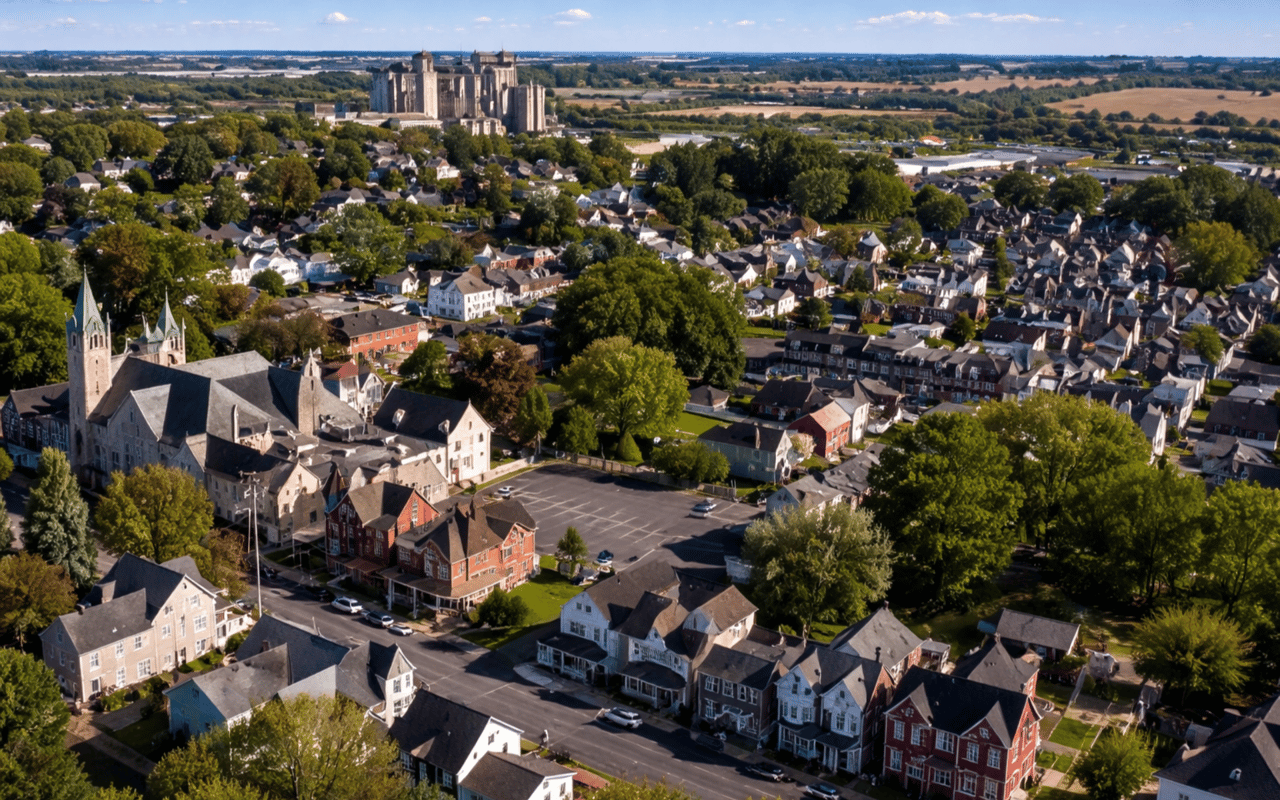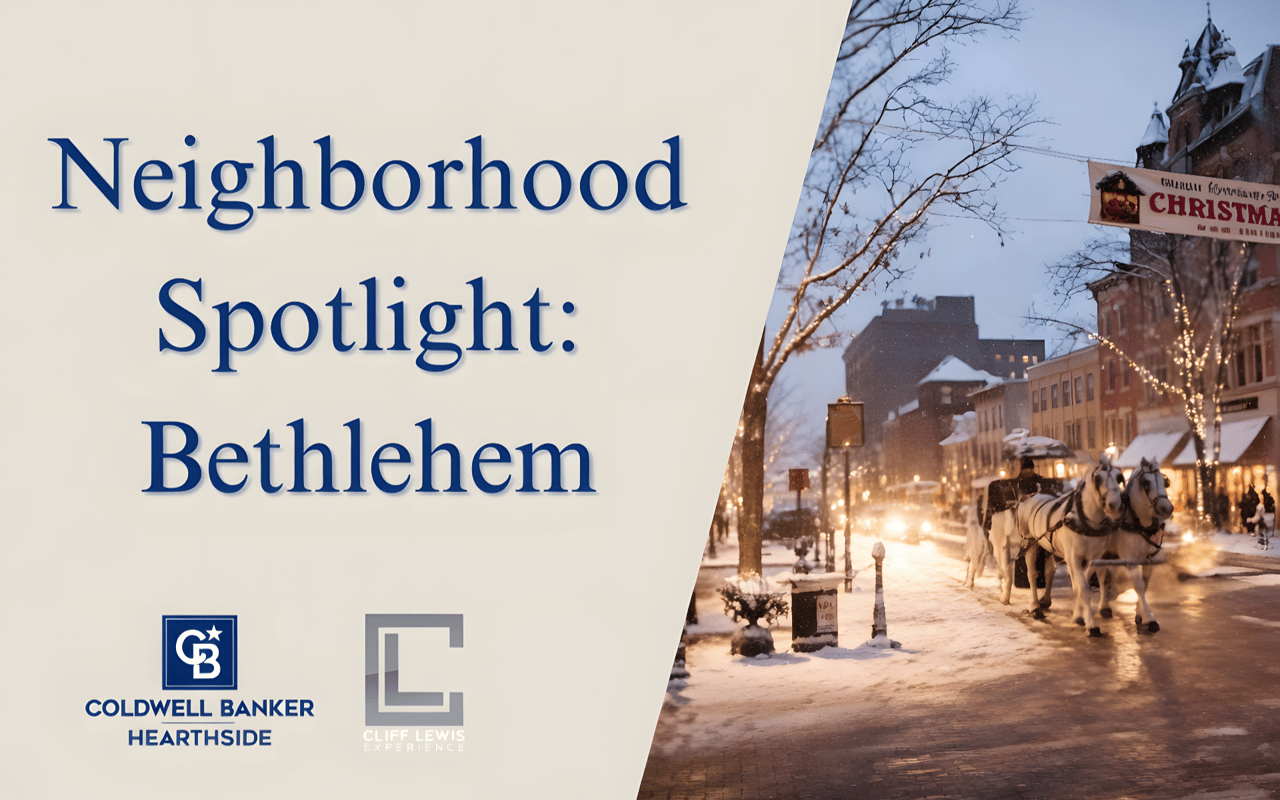
Walk past 534 Main Street on any ordinary Tuesday and you will see racks of Aran sweaters, a case of imported cheddar, and a doorway that leads into McCarthy's Red Stag Pub next door. Nothing about Donegal Square announces that it is the reason a quarter of Bethlehem's Main Street corridor turns over to bagpipes, caber tosses, and tartan every September. But it is. Neville Gardner opened the shop in February 1985, three years before he helped get the Celtic Classic Highland Games and Festival off the ground in 1988. The festival did not land on Bethlehem from outside. It grew out of a storefront that was already there, selling wool and whiskey to a city that turned out to have more Scots Irish ancestry than most people assumed.
That sequence matters more than it sounds like it should, because it explains something the festival's own marketing never quite says out loud: the geography of Celtic Classic weekend is still organized around Main Street, not around the fenced festival grounds. If you live in downtown Bethlehem, understanding where the festival actually started changes how you read the whole three days.
The store that predates the festival by three years
Gardner named his shop after Donegal Square in Belfast, the plaza outside the building where he worked as a civil engineer before he left that career to import Irish goods full time. By 1997 he had added Granny McCarthy's Tea Room next door, which became McCarthy's Red Stag Pub and Whiskey Bar in 2013. Somewhere in between, he became one of the people who helped build what the Celtic Cultural Alliance now calls the largest Highland Games and Festival in North America.
For a resident, the practical upshot is this: Donegal Square and McCarthy's are not festival pop-ups. They are a year-round retail and hospitality anchor that predates the event by decades, which means they absorb festival crowds differently than a vendor tent does. The shop stays open on its normal hours through the weekend, the pub keeps pouring, and both get considerably busier than a typical late-September Saturday. If your routine includes walking past that block, plan for foot traffic that starts building well before the festival's official opening hour.
Why the map still bends toward Main Street
The festival's official address is 305 Conestoga Street, and that is where the ticketed grounds, the five entertainment stages, and the vendor marketplace sit. But the Tartan Parade and the Rotary Celtic Classic 5K both route down Main Street before anything happens at the Conestoga Street gates, which means the corridor between Donegal Square and the rest of downtown functions as the event's real front door for anyone approaching on foot from the Bethlehem side of the river.
That distinction is easy to miss if you are reading the festival's hours off a flyer. The 2026 schedule runs Friday from 4 to 9 p.m., Saturday from 9 a.m. to 10 p.m., and Sunday from 10 a.m. to 6 p.m., but Main Street starts filling before the gates open on Saturday, because the 5K and the parade use it as a staging ground. If you live along that stretch, your Saturday morning is going to feel like festival weekend well before 9 a.m., regardless of what the printed hours say.
The parking and shuttle math nobody explains up front
There is no street parking anywhere near the festival grounds. Organizers are explicit about this and warn that unauthorized vehicles can be towed at the owner's expense. For residents, that means the calculus is not "where do I park," it is "do I drive at all."
| Option | Distance from grounds | Cost | Availability |
|---|---|---|---|
| 75 W. North Street garage | 2 blocks | $15/day | All three days |
| Main St. Commons (enter from Broad St., behind 559 Main St.) | 2 blocks | $15/day | All three days |
| Johnston Park, Old York Rd. | Adjacent to grounds | $15/day | All three days |
| Shuttle from Schoenersville Road park and ride | Off-site | $6/person, ages 6+ (5 and under free) | Saturday 9 a.m. to 8:30 p.m., Sunday 9 a.m. to 7:30 p.m. Every 20 to 30 minutes |
Notice what is missing from that table. The shuttle does not run on Friday at all. That is a detail the Celtic Cultural Alliance's own parking page states plainly, and it is the single most useful piece of planning information for anyone who lives here and wants to catch the opening evening without fighting for one of the $15 garage spots. Friday night, your options are the garages, walking, or staying home until Saturday.
Friday is a different weekend entirely
Because the shuttle is off the table on Friday, and because the evening runs a shorter window than the other two days, Friday functions as a soft open rather than the main event. The crowd skews toward people who live close enough to walk, which in practice means Main Street residents get first access to a lower-density version of the festival before the weekend crowds arrive on the buses and the garages fill.
If your building sits within walking distance of the grounds, Friday evening is worth treating as its own occasion rather than a preview of Saturday. You get five stages of entertainment, the marketplace, and Celtic Heritage Hollow's cultural programming without the volume of a festival that estimates put somewhere north of 200,000 visitors across the full weekend, depending on which source you check. The attendance figures vary enough between organizers and secondary listings that no single number should be treated as precise, but the qualitative point holds regardless of which count you believe: Saturday and Sunday are the crowded days, and Friday is not.
Where a resident can still find quiet
The Rotary Celtic Classic 5K, now in its 34th year and organized by the Bethlehem Morning Star Rotary, starts at the Bethlehem Area Public Library with registration at 10 a.m., moves participants to the start line by 11:15, and begins the race at 11:25, timed deliberately as the first event of the Tartan Parade. The route runs north on New Street, west onto Broad, then south on Main before finishing at Sand Island, with an awards ceremony at 12:30 p.m. Proceeds fund the Rotary's scholarship and STEM camp programs for local students.
That route tells you exactly where the density concentrates between 11 a.m. and 1 p.m. on Saturday: the library, New Street, Broad Street, and the Main Street corridor down to Sand Island. If you need to run errands or want a table without a wait, the side streets east of that path, away from the Broad and Main intersection, stay comparatively calm through the late morning. Celtic Heritage Hollow's ticketed offerings, like the whiskey masterclass, also tend to pull a self-selecting crowd away from the free stages, which thins out the general foot traffic near the marketplace during those sessions.
Monday morning, and the two weeks after
By Sunday evening at 6 p.m., the grounds close and the Conestoga Street gates come down for another year. Main Street does not reset instantly. Donegal Square and McCarthy's stay busy into the following week from visitors extending a weekend trip, but the parade barricades and vendor tents clear out fast, and the corridor is back to its ordinary rhythm by the following weekend. For a city nicknamed the Christmas City, founded on Christmas Day by Moravian settlers in 1741, late September into early October is really the hinge point between the festival calendar and the slower stretch before the holiday season starts building again. It is a good window for the kind of unhurried downtown walk that gets harder to find once the tree lighting crowds arrive.
Living near a festival like this means learning its actual shape, not just its published hours. Celtic Classic did not appear on Bethlehem's calendar from nowhere. It grew out of a Main Street doorway that a lot of residents walk past without a second thought, and that origin still shapes where the crowd thickens, where the shuttle does and does not run, and which mornings you can still get a quiet cup of coffee.
If you are watching Bethlehem's Main Street corridor for reasons that go beyond festival weekend, from what a property near that kind of foot traffic is actually worth to how a downtown block like this holds its value year over year, The Cliff Lewis Experience knows this stretch of the Lehigh Valley in the kind of detail that only comes from working it every day. Reach out when you are ready to talk specifics.